Kitchen Backsplash Tile in Miami: Materials, Costs, and What Works
The backsplash is the one surface in your kitchen that gets splashed, heated, and stared at every day. Here is what actually holds up in South Florida, what it costs, and the details most homeowners miss.
Jovanni Fitoria
Owner, Fitoria Tile & Marble · 18 Years in South Florida
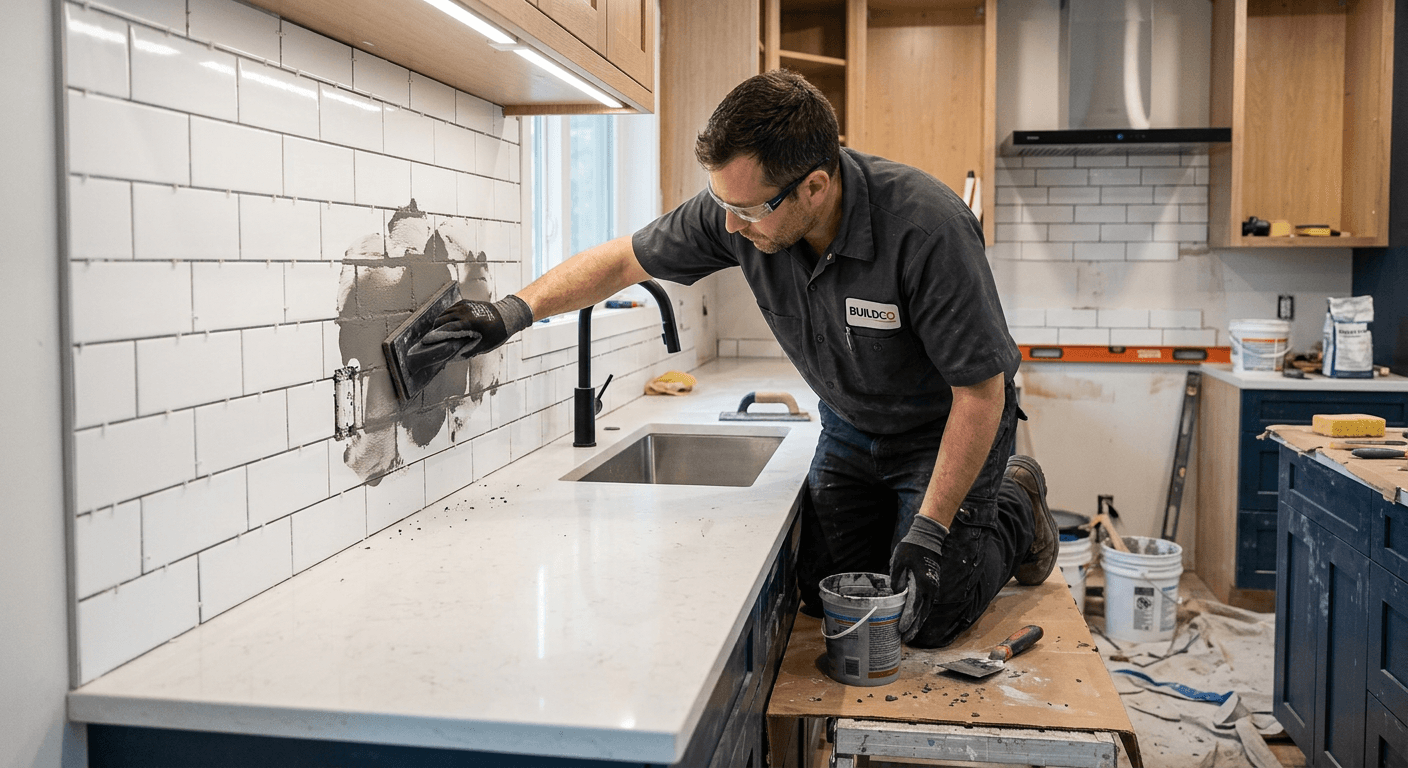
A kitchen backsplash in Miami costs between $800 and $3,500 installed for a typical kitchen, depending on the tile material, pattern complexity, and how much wall area you are covering. The standard coverage area for most kitchens is 15 to 30 square feet, though full-wall backsplashes that run from the counter to the upper cabinets can double that.
I have installed thousands of kitchen backsplashes across Miami-Dade County. The material gets all the attention, but the installation details are what determine whether a backsplash still looks good five years from now. Grout selection, sealing schedule, edge finishing, and how cuts are handled around outlets and windows separate professional work from the kind that starts falling apart.
Backsplash Materials That Work in Miami
Not every tile material makes sense behind a kitchen counter in South Florida. Humidity, heat from cooktops, grease splatter, and daily cleaning all take a toll. Here is what we install most often and how each material actually performs.
Porcelain and Ceramic Tile
This is the workhorse material for kitchen backsplashes and the one I recommend most often. Porcelain is denser and more water-resistant than ceramic, but both perform well in backsplash applications because they are not submerged in water or subject to heavy floor traffic. Porcelain subway tile in a 3x6 or 4x12 format is the most popular choice we install. It resists stains, handles heat, cleans easily, and works with almost every kitchen style from modern to traditional.
Cost installed: $10 to $25 per square foot, depending on the tile format and pattern.
Natural Stone: Marble, Travertine, and Limestone
Natural stone backsplashes are common in Miami kitchens, especially in higher-end homes and condos in areas like Brickell, Coral Gables, and Key Biscayne. Marble in particular has a look that no porcelain replica fully matches. The veining, depth, and surface quality of real stone is what draws people to it.
The trade-off is maintenance. Marble is porous. In a kitchen environment, it will absorb oil, wine, citrus juice, and anything acidic if it is not sealed properly. In Miami, the humidity accelerates this because the stone stays slightly more absorptive than it would in a dry climate. We seal every natural stone backsplash before grouting and recommend resealing every 6 to 12 months.
Cost installed: $25 to $50 per square foot for marble, $20 to $40 for travertine and limestone.
Glass Tile
Glass tile catches light in a way that other materials do not. It is popular in modern Miami kitchens and condos where clean, bright aesthetics are the goal. Glass is nonporous, heat-resistant, and easy to clean. The downsides are that it shows every water spot, fingerprint, and grease splash. If you cook frequently, you will be wiping it down constantly.
Glass tile also requires more precision during installation. It cannot be cut with the same tools as ceramic or porcelain, and the adhesive behind it is visible through the tile, so the thinset must be applied evenly and in the right color. White thinset is standard for glass.
Cost installed: $25 to $50 per square foot for standard glass, $40 to $75 for custom or handmade glass mosaic.
Large Format Porcelain Slabs
This is the fastest growing backsplash category we are seeing in Miami. Large format porcelain slabs, typically 48x96 inches or larger, are installed as a single piece or with minimal seams. The result looks like a continuous stone surface without grout lines. It is popular in contemporary kitchens and pairs well with waterfall-edge islands.
The installation is more complex than standard tile because the slabs are heavy, fragile before installation, and require specialized cutting equipment. But the finished product is striking and virtually maintenance-free because there are almost no grout joints to clean or reseal.
Cost installed: $35 to $65 per square foot, including material and specialized installation.
What It Costs: Real Pricing for Miami Kitchens
These are installed prices as of early 2026, including material, labor, surface prep, and grouting. They assume standard kitchen layout with a countertop-to-cabinet backsplash of 15 to 30 square feet.
| Material | Per Sq Ft Installed | Typical Kitchen (20 sq ft) | Full Wall (40 sq ft) |
|---|---|---|---|
| Ceramic/porcelain subway | $10 to $25 | $200 to $500 | $400 to $1,000 |
| Natural stone (marble) | $25 to $50 | $500 to $1,000 | $1,000 to $2,000 |
| Glass tile | $25 to $50 | $500 to $1,000 | $1,000 to $2,000 |
| Handmade/zellige | $30 to $60 | $600 to $1,200 | $1,200 to $2,400 |
| Large format slab | $35 to $65 | $700 to $1,300 | $1,400 to $2,600 |
These ranges reflect standard layouts. Costs increase with complex patterns (herringbone adds 15% to 25% in labor), unusual tile sizes that require more cuts, and layouts with multiple windows, outlets, or inside corners.
Patterns That Work Best
The pattern you choose affects the cost, installation time, and overall look of your backsplash. Here are the layouts we install most often in Miami kitchens.
Running bond (subway)
The classic offset brick pattern. Most popular, most cost-effective. Works with any tile size from 2x4 to 4x16. It is timeless and will not look dated in five years.
Vertical stack bond
Tiles stacked directly on top of each other with aligned grout lines. This is the current trend in contemporary Miami kitchens. It reads as more modern than running bond and pairs well with flat-panel cabinetry.
Herringbone
Tiles set at 45-degree angles in a V pattern. It adds visual texture and movement. Herringbone is labor-intensive because every tile is a diagonal cut at the edges, which is why it costs 15% to 25% more to install than straight patterns.
Large format slab
A single piece of porcelain or quartz covering the entire backsplash area. Minimal grout lines and a clean, seamless appearance. This is the premium option and the fastest to clean.
Mosaic
Small tiles, typically 1x1 or 2x2 inches, often pre-mounted on mesh sheets. Popular for accent areas, behind the range, or in small kitchens where a larger pattern would feel overwhelming. More grout joints means more maintenance.
What Most Homeowners Get Wrong
After 18 years of backsplash installations in Miami, the same mistakes keep coming up. Here are the ones that cost people time and money.
Choosing Grout Color Without Seeing a Sample
Grout makes up 10% to 15% of the visible surface on most backsplashes. The wrong grout color can make expensive tile look cheap. We always do a grout sample on-site before committing. A white tile with bright white grout looks very different than the same tile with a warm gray grout. The sample takes ten minutes and prevents a mistake that costs hundreds to fix.
Not Planning for Outlets and Switches
Every kitchen backsplash has electrical outlets, and the cuts around them are where amateur work shows. The tile layout should be planned so that outlet cuts fall in the least visible spots and the cuts are clean. We also install outlet plate extenders when the tile thickness pushes the outlet box below the tile surface. This is a small detail that matters for both appearance and electrical code compliance.
Skipping the Sealer
Every backsplash with natural stone or cementitious grout needs sealing. In Miami, the humidity makes this more critical than in drier climates. Unsealed grout in a kitchen will stain within weeks from cooking oil, coffee, and red sauce. We seal all grout joints after installation and recommend resealing every 12 months for kitchens.
Backsplash Height That Does Not Match the Kitchen
The most common backsplash height is from the countertop to the bottom of the upper cabinets, typically 15 to 18 inches. But if your kitchen has open shelving, no upper cabinets, or a window above the sink, the backsplash height needs to be planned deliberately. Running tile halfway up a wall with no natural stopping point looks unfinished. We recommend either going to the ceiling or stopping at a natural architectural break like a window sill or shelf bracket.
Installation Process
A standard kitchen backsplash installation follows this process. Most jobs take 1 to 2 days depending on the tile material and pattern complexity.
1. Surface preparation
We clean the wall, repair any damaged drywall, and apply a skim coat if the surface is uneven. For installations over existing tile, we remove the old material first. The wall needs to be flat within 1/8 inch over 10 feet for a professional result.
2. Layout and dry fit
We plan the tile layout on the wall before any adhesive goes down. This determines where cuts fall, how the pattern aligns with outlets, and where the focal point is. A good layout means balanced cuts on both sides and no thin slivers of tile at the edges.
3. Tile setting
Thinset mortar is applied with the appropriate notched trowel and tiles are set according to the planned layout. We use leveling clips on larger format tiles to prevent lippage. Each tile is back-buttered if the format or material requires it.
4. Grouting
After the thinset cures overnight, we grout all joints. The grout type depends on the tile: sanded grout for joints wider than 1/8 inch, unsanded for narrower joints, and epoxy grout for glass tile or areas that need maximum stain resistance.
5. Sealing and cleanup
Once the grout has cured for 48 to 72 hours, we apply a penetrating sealer to the grout and to any natural stone tile. We clean the entire surface and do a final inspection for any spots that need touch-up.
Miami Condo Backsplash Considerations
If you live in a condo in Miami, there are a few additional considerations. Most condo associations require a modification request before any tile work, even for a backsplash. The approval process typically takes 2 to 4 weeks. Some buildings require proof of insurance from the contractor and restrict work hours. We handle the paperwork and insurance documentation for condo projects regularly.
Noise is also a factor. Cutting tile generates noise that carries through concrete condo walls. We schedule cuts during approved hours and use wet saws that produce less noise than dry cutting. For buildings with strict noise policies, we pre-cut as much tile as possible off-site.
Ready to upgrade your kitchen backsplash?
We provide free in-home estimates with material samples. Licensed and insured in Miami-Dade County.
Frequently Asked Questions
How much does a kitchen backsplash cost in Miami?
A professional kitchen backsplash in Miami costs $800 to $3,500 for a typical kitchen. Ceramic and porcelain subway tile runs $10 to $25 per square foot installed. Natural stone costs $25 to $50. Glass and custom mosaics range from $40 to $75 per square foot.
What is the best backsplash tile for Miami kitchens?
Porcelain tile is the most practical choice. It handles humidity, resists staining, and requires minimal maintenance. For a higher-end look, marble is popular but needs sealing every 6 to 12 months in South Florida humidity.
How long does backsplash installation take?
A standard kitchen backsplash takes 1 to 2 days. Complex patterns like herringbone may add a half day. The backsplash should not get wet for 24 to 48 hours after grouting.
Do I need to seal my kitchen backsplash tile?
Porcelain and ceramic do not need sealing. Natural stone must be sealed before grouting and resealed every 6 to 12 months. Grout between any tile type should be sealed to prevent moisture absorption and discoloration.
Can you install a backsplash over existing tile?
We do not recommend it. Installing over existing tile creates problems at countertop edges, outlet boxes, and cabinet transitions. Removing the old backsplash takes 2 to 4 hours and produces a much better result.
What backsplash patterns are popular in Miami right now?
Vertical stack bond subway tile, herringbone in marble or porcelain, large format slabs, and zellige-style handmade tile. Classic subway in running bond remains the most popular overall because it works with any kitchen style and is cost-effective.