The Complete Guide to Renovating Your Miami Condo
Everything you need to know before touching a single tile — from HOA approvals and sound control to realistic timelines and budgets. Written from 18 years of doing this work, not from a Google search.
Jovanni Fitoria
Owner, Fitoria Tile & Marble · 18 Years in South Florida
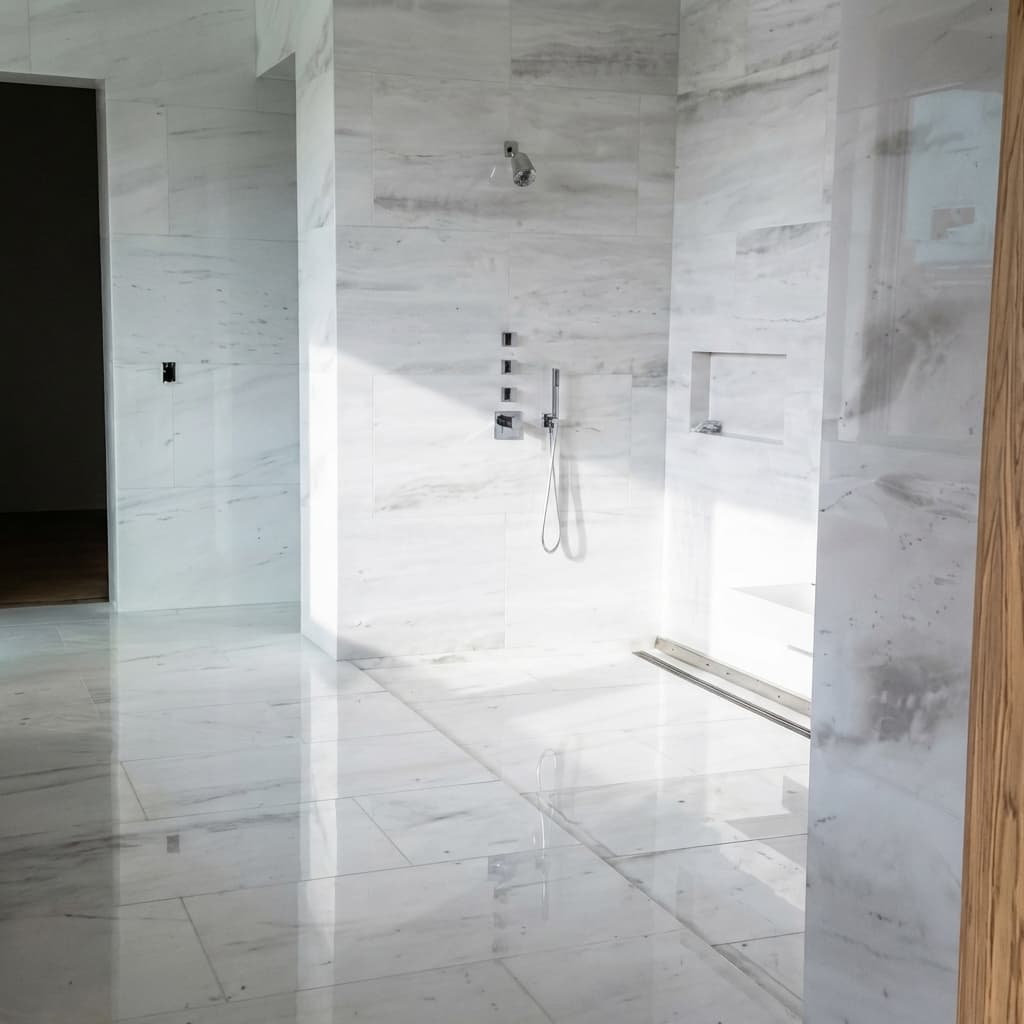
If you own a condo in Miami and you're thinking about renovating, you're not alone. Across Brickell, Sunny Isles, Aventura, and every high-rise corridor in between, condo owners are updating kitchens, transforming bathrooms, and replacing worn carpet with tile or luxury vinyl.
But here's what catches most people off guard: renovating a condo is not the same as renovating a house. There are rules. Timelines are longer. Costs are higher. And if you don't plan for the differences upfront, you'll find out about them the hard way — usually when your building manager stops your project mid-tile.
This guide covers what we've learned from hundreds of condo projects across Miami-Dade. It's practical, it's specific to South Florida, and it's written for people who want to do this right the first time.
HOA Approval
1–4 weeks
Sound Control
IIC 55+
Extra Cost
+15–25%
Timeline Impact
+20–30%
Step 1: Get Your HOA On Board First
Before you pick a single tile sample, contact your building management and request the renovation application package. Every condo in Miami has one, and they all want the same things:
- → Contractor's license number, insurance certificate (COI), and references
- → Detailed scope of work — what exactly will be done
- → Project timeline with start and end dates
- → Flooring specifications, including sound control product and IIC rating
- → A construction deposit check — usually $500 to $2,000

Step 2: Understand Sound Control — The Rule That Changes Everything
This is the single most important thing that separates condo work from house work.
When you remove carpet and install hard flooring — tile, hardwood, vinyl — the unit below you suddenly hears every footstep, every dropped phone, every chair sliding across the floor. It's why virtually every Miami condo HOA requires IIC-rated sound control underlayment beneath hard surface flooring.
IIC stands for Impact Insulation Class. It measures how well a floor assembly blocks impact sound from reaching the unit below. Most Miami condos require IIC 55 as a minimum. Luxury towers in Brickell, Sunny Isles, and Key Biscayne often require IIC 60 or higher.
What IIC Ratings Actually Mean
The systems we use most often are Schluter DITRA-SOUND, Pliteq GenieMat, and Mapei Mapeguard. Each has different thickness, weight, and cost characteristics. The right choice depends on your building's slab thickness, your flooring material, and the IIC target you need to hit.
Step 3: Budget Realistically — Condos Cost More
A condo renovation in Miami typically costs 15-25% more than the same scope of work in a single-family home. For current price ranges by project type, see our bathroom remodel cost guide and tile installation cost guide. Here's why condos cost more:
| Extra Cost Factor | Impact |
|---|---|
| Sound control underlayment | +$1–$4 per sq ft |
| Restricted work hours (9-5 only) | +20-30% longer project = higher labor |
| Freight elevator logistics | Added delivery coordination time |
| Dust and noise containment | $200–$500 per project |
| Construction deposit (refundable) | $500–$2,000 held during project |
| Building insurance requirements | Contractor must carry $1M–$2M+ coverage |
None of these are negotiable. They're the cost of doing quality work in a shared building. A contractor who gives you a quote that doesn't account for these factors either doesn't understand condo work or is planning to cut corners.

Step 4: Choose Your Materials With the Building in Mind
Material selection for condos follows different logic than for houses. You need to think about:
- → Weight. Marble and natural stone are heavy. Can your freight elevator handle the load? Can the delivery crew navigate hallways with 300-pound slabs?
- → Height. Sound control adds 3-10mm to your floor assembly. Will doors still open? Will transitions to adjacent rooms work?
- → Noise during installation. Cutting natural stone is louder than cutting porcelain. Some buildings restrict stone cutting inside the unit entirely.
- → HOA design approval. Some buildings require material samples for aesthetic review, especially for visible areas like entryways.
Step 5: Plan for the Timeline — It's Longer Than You Think
Here's the reality of condo renovation timelines in Miami:
The biggest timeline surprise for most condo owners is the pre-work phase. By the time you get HOA approval, order materials, and schedule your contractor, 4-6 weeks may have passed before a single hammer swings. Factor this into your planning, especially if you have a hard deadline (moving in, listing for sale, snowbird season).
Step 6: Hire a Contractor Who Actually Knows Condos
This might be the most important piece of advice in this guide. A great house contractor can be a terrible condo contractor. The skills overlap, but the logistics, regulations, and relationship management are completely different.
When evaluating contractors for your condo project, ask:
- → "Have you worked in this specific building before?" — If yes, they already know the rules, the management staff, and the logistics.
- → "What sound control system will you use, and what IIC rating does it achieve on our slab type?" — A vague answer is a red flag.
- → "Do you carry the insurance limits my building requires?" — Most luxury towers require $1M-$2M in general liability. Not all contractors carry this.
- → "Will you handle the HOA application?" — An experienced condo contractor knows what buildings want and can prepare the package for you.

The Bottom Line
Renovating a Miami condo is absolutely worth it. A beautifully tiled bathroom, a modern kitchen backsplash, or seamless porcelain floors can transform your daily living experience and significantly increase your unit's value.
But it takes more planning, more patience, and a slightly bigger budget than the same project in a house. The owners who have the best experience are the ones who understand the process upfront, choose the right contractor, and give themselves enough lead time.
That's what this guide is for. If you found it helpful and you're thinking about a project, we're always happy to talk through the specifics — no sales pitch, just honest advice based on what we've seen work in your building or one like it.
Questions about your condo project?
We're happy to walk you through the process for your specific building. No obligation — just straight answers.
Related Reading
Bathroom Remodel Cost in Miami →
Tile Installation Cost Guide →
Condo Tile Installation in Brickell →
Condo Tile Installation in Sunny Isles Beach →
Condo Bathroom Remodel in Aventura →
Soundproof Flooring for Miami Beach Condos →
Condo Flooring Installation in Edgewater →
Marble vs. Porcelain Tile: An Honest Comparison →
How Long Does a Bathroom Remodel Actually Take? →
Choosing Tile That Survives Miami's Climate →